
North-South Corporation
STAR OF HEALTH PROJECT
(Sept 2024 – Aug 2027)
NAPAK, KARAMOJA-UGANDA
Being Implemented by St. Kizito Hospital Matany
1
STRENGTHENING LOCAL HUMAN RESOURCE CAPACITY TARGET 17-9
2
SIGNIFICANT IMPROVEMENT OF AVAILABLE HYGIENE & SANITATION
TARGET 5-6
3
ACCESSIBILITY AND EXPANSION OF HEALTH CARE SERVICES TARGET 4-3
“MOTHERS & CHILDREN FIRST“
BACKGROUND OF THE PROBLEM
According to the WHO, the global maternal mortality rate (MMR) in 2000 was estimated to be 339 maternal deaths per 100,000 live births, in 2021 it was estimated to be 158.8 deaths per 100,000 live births.
Quality antenatal care (ANC) and postnatal care (PNC) services play a crucial role in improving health outcomes for both mothers and infants through preventive care and the identification of risk factors.
Menstrual health and hygiene (MHH) is essential to the well-being and empowerment of women and adolescent girls, according to the World Bank (2022). An estimated 500 million women lack access to menstrual products.
National (Uganda)
Uganda’s health indicators have significantly improved, with maternal mortality rates falling from 366 to 189 per 100,000 live births (UDHS, 2022). Despite significant progress in lowering global MMR, it remains unacceptably high, falling short of the global target of 70 maternal deaths per 100,000 live births by 2030 set by SDG target 3.1.
Previous attempts to address the situation, such as the National Safe Motherhood and Family Planning Programmes, have not had the desired effect. According to the Maternal and Perinatal Death Surveillance and Response Report for Fiscal Year 2020/2021, the three leading causes of institutional maternal deaths are haemorrhage, abortion complications, and hypertensive disorders of pregnancy.
Regional (Karamoja)
According to the 2022 UBOS report, the Karamoja sub-region has a population of 1.4 million people and faces the highest poverty levels in Uganda, with a Human Poverty Index of 53.8% compared to the national average of 37.5%. The health sector here lags far behind the rest of the country, with limited facilities, severe staffing shortages, and poor accessibility. Mothers and children are especially vulnerable, with maternal mortality at 588 per 100,000 live births and under-5 mortality at 55.7 per 1,000 live births. Sanitation and nutrition challenges further compound the crisis, as 62% of households lack toilets and 98% of families report food insecurity.
District level
According to the 2014 Census (UBOS), Napak District in Karamoja has 142,224 inhabitants, with extremely high illiteracy rates—81.3% among adults and 86.4% among females. Nearly half the population lives in 13 “hard-to-reach” settlements, where poor roads, limited schools, few water points, and inadequate health services make life especially difficult. Children make up 50.4% of the population, underscoring the urgent need for improved health and education systems.
By 2020, Napak had only 14 health facilities, many lacking essential equipment and requiring renovation. Preventable communicable diseases dominate outpatient visits, with malaria and pneumonia leading. Poor nutrition and sanitation further worsen health outcomes, as shown by Matany Hospital’s report of 9,255 cases of acute watery diarrhoea between 2018–2023. A comprehensive strategy is needed—combining better facilities, equipment, and preventive measures like hygiene and sanitation—to protect vulnerable groups, especially women and children.
Our strategy
Capacity Building
Given that human resource for health is a critical pillar for a well-functioning health system, and given the alarmingly low ratio of healthcare professionals to patients in Napak district, the first strategy is to increase and build capacity for human resources in the health sector:
-
Health workers at MH will be provided with knowledge and skills about common medical conditions in their catchment area through serial Continuous Medical Education (CMEs);
-
25 girls will receive education bursaries to pursue certificate courses in nursing and midwifery;
-
Over 1000 health workers will receive in-service training;
-
12 of them receiving training in result-based and project management;
-
20 VHT coordinators and over 600 VHTs will be trained in quality healthcare management;
-
105 healthcare professionals in lower health facilities will receive specialised training in neonatal resuscitation and obstetric emergency handling;
-
The selected parish chiefs, active women, and community change agents will receive training in community hygiene and sanitation management and strategic decision-making.
In the current maternal and infant health project, we are already increasing the number of professionally trained nurses and midwives in the district: 21 young people will soon get their certificate as nurse or midwife. Good training of the student nurses and midwives from MH school of nursing and midwifery is a key factor contributing to a reduction of infant and maternal mortality rate. In effect, the hospital staff and those at the lower-level health units were trained at the nursing school.
Provision of quality comprehensive emergency obstetrics and newborn care
The number of mothers in the Napak district who have access to Comprehensive Emergence Obstetrics and Newborn Care will increase:
-
Through mobile clinics in hard-to-reach areas. The project intends to continue and extend the work of the current maternal and child health project in Poron by offering additional services. The project will also extend its scope to include a new hard-to-reach area.
-
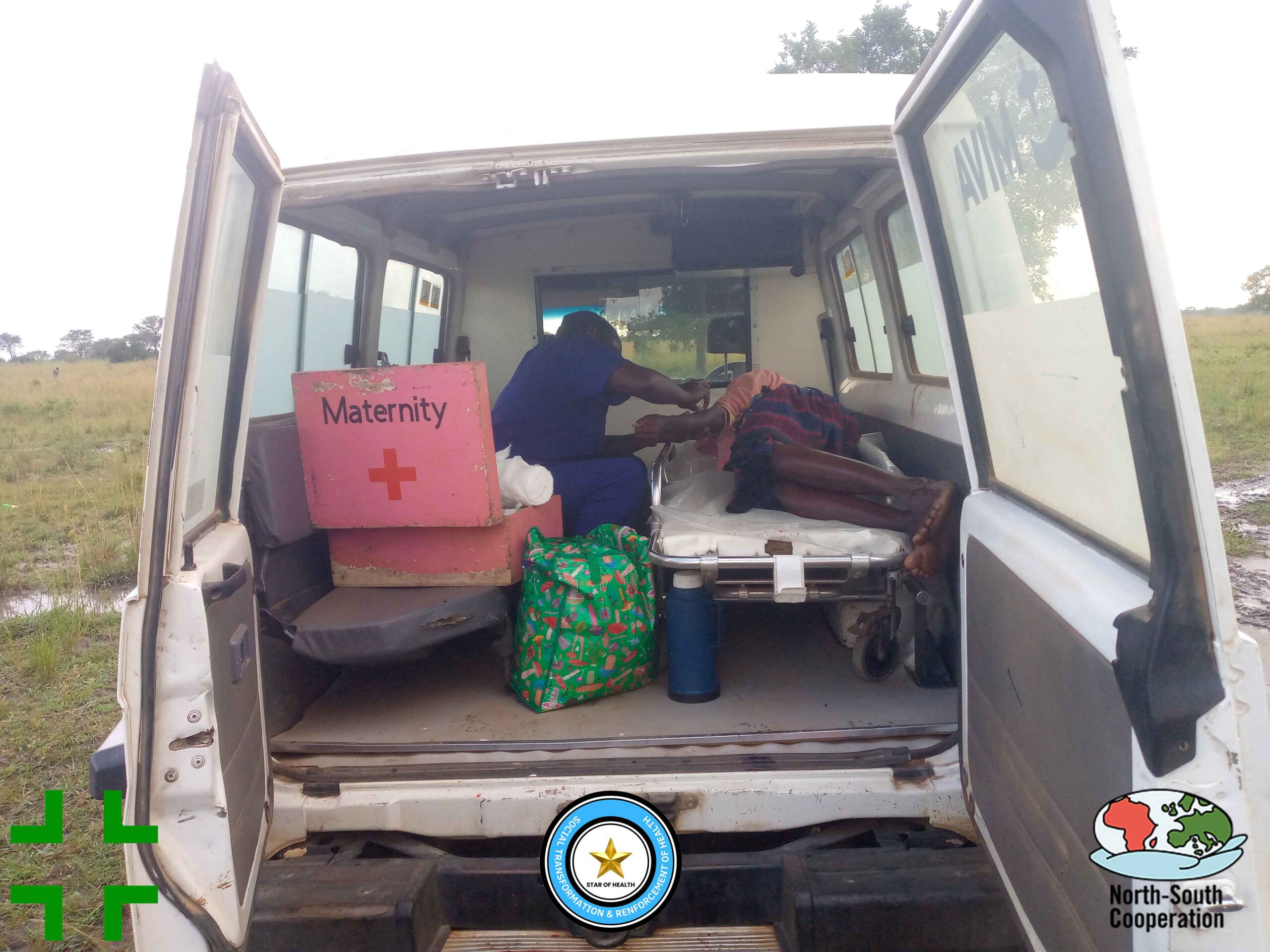
During referrals, the project will include the lifting of pregnant mothers with complications from lower health facilities for further management in comprehensive emergency obstetric care.
-
By providing a free ambulance service to the pregnant mothers and assuring them to have a safe delivery under the supervision of a skilled birth personnel or doctor at MH.
-
By making available supplies and drugs, which are sometimes unavailable at the facilities.
Even this strategy is based on the experience and the extraordinary results of the current project.
Improvement of hygiene and sanitation conditions for women and children
-
One of the key components of the project is to manufacture and distribute concrete slabs for the construction of termite-resistant pit latrines, children and mothers in households that will receive sanitation facilities will benefit from improved sanitation.
-
Parish chiefs will receive hygiene and sanitation management training to streamline hygiene and sanitation practices and sustain project accomplishments.
-
The project will also provide sanitary towels and soap to vulnerable girls in Napak district, and community change agents will be trained in the production of reusable sanitary pads to ensure a sustainable supply even after the project has ended.
OUTREACHES
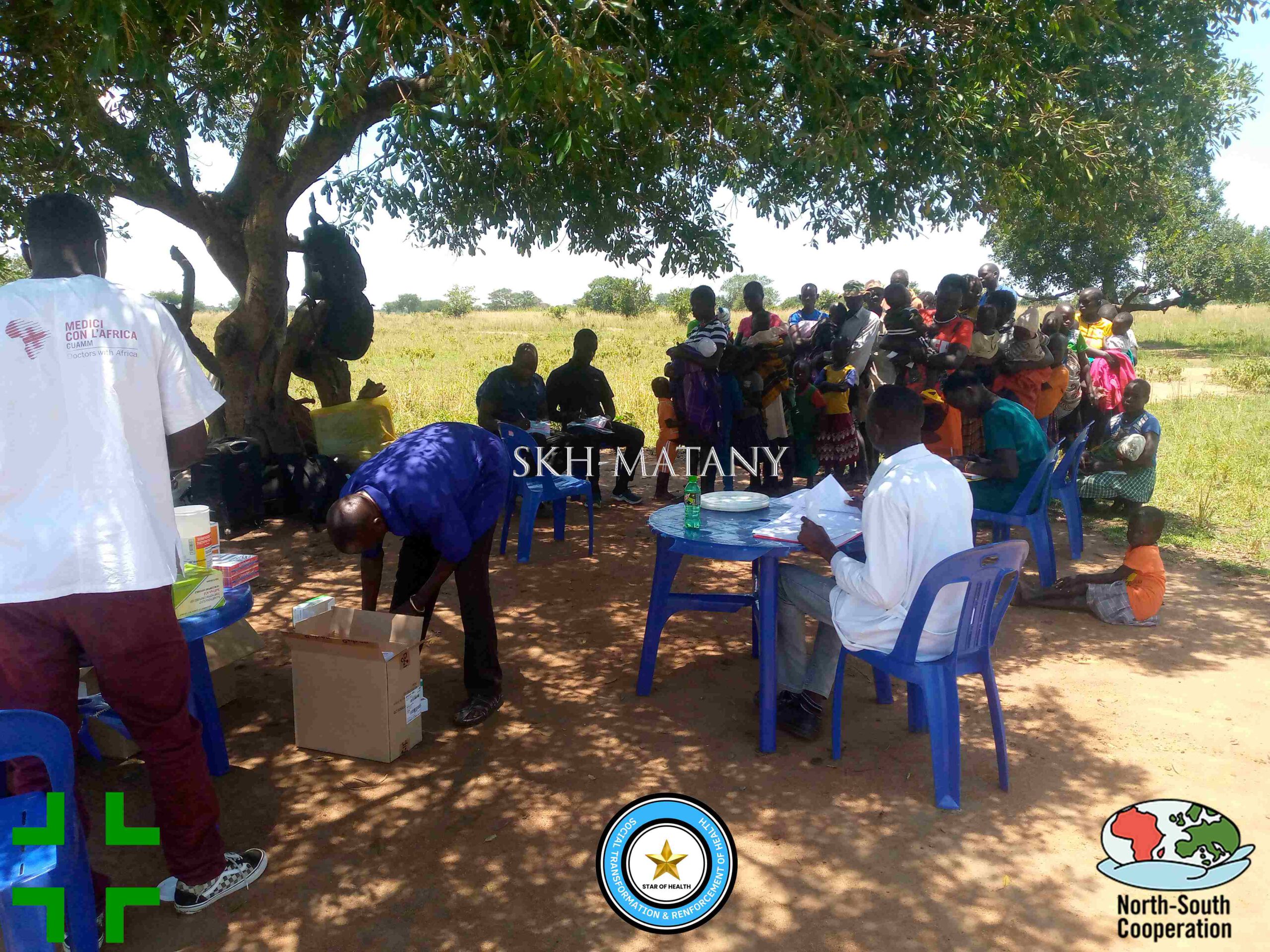
St. Kizito Hospital Matany, commonly Known as Matany Hospital, the Implementing partner of CNS Project dubbed “Star of Health”, Social Transformation and Reinforcement of Health”since its commencement date of 1st of September 2024 has been actively engaged in various activities that the project in its objectives intends to achieve by the end of the project, among the activities are field visits to the communities where access for various healthcare services such as ANC, medicines, and vaccinations is a nightmare.
The Hospital at every end of the month dispatches a team composed of PHC staff headed by the PHC In charge to hard to reach areas of Poron Sub County ready for a two day field visit, where the conduct various health care services ranging from eye care, ANC services most importantly the examination of the pregnancy using the newly dispatched Ultra Sound Scan Machine, vaccinations and many others activities that the community deserves.
The hospital team works together with the village health teams (VHTs) who help in the identification of different cases and the referral of different people with different health related conditions thus the hospital ambulance pick them for more further management.
THE COMPREHENSIVE EMERGENCY OBSTETRIC AND NEW-BORN CARE PROCEDURES
St Kizito hospital Matany being the only health centre in Napak district providing more comprehensive emergency obstetric and new-born procedures to the population. All the health lower units refer all mothers to Matany hospital for better services and skilled procedures for mothers and new-born babies.
The hospital provides a wide coverage of services for maternal health, new-born especially Antenatal services, safe motherhood, safe delivery, baby care and mothers. The hospital always carries out normal and safe deliveries.
The ambulance Is available to pick up the complicated mothers during delivery which is only done in Matany hospital like caesarean section, evacuation, aborting products, pre-eclampsia, premature delivery, a breach among others which have encouraged and improved maternal and neonate death in Napak district.